
Why We Stopped Chasing Follower Counts and What We Look At Instead
There's a version of this industry that is still very much obsessed with followers. Agencies that lead with them in pitch decks. Clients who ask about them in the first meeting. Influencer briefs that filter by them before anything else.
We get it. Follower count is a number everyone understands. It's visible, it's easy to compare, and it feels like proof of something.
The problem is that it's barely proof of anything anymore.
What Follower Count Actually Tells You
A follower count tells you how many people clicked a button at some point in the past. That's it.
It doesn't tell you how many of those people are still paying attention. It doesn't tell you whether they're the right people for your brand. It doesn't tell you whether they buy things, share things, or take any action at all when an account they follow posts something. It definitely doesn't tell you whether a partnership with that account will move your business.
We've seen accounts with 800,000 followers generate fewer meaningful results than accounts with 12,000. Not occasionally. Regularly. Because the number on the profile is a lagging indicator of a moment in time, not a live measure of influence or trust.
So if follower count isn't the signal, what is?
The Shift That Changes Everything: Audience Versus Community
This is the distinction most brands miss and it's the one that matters most.
An audience watches. A community participates.
An audience is a group of people who receive content. A community is a group of people who feel connected to something and to each other through it. They don't just consume. They share, they comment with real thoughts, they defend the brand in conversations you're not even part of, they bring their friends in because they want them to be part of it too.
The difference in business terms is enormous. An audience gives you reach. A community gives you something far more valuable: people who build your brand for you.
When your community is strong, your best customers become your best marketers. They create content about you without being asked. They answer questions on your behalf in comment sections and group chats. They tell their networks about you with the kind of genuine enthusiasm that no paid campaign can manufacture. They trust you and they transfer that trust to the people around them.
That is not something you can buy with a large follower count. It is something you build over time by treating your audience like a community and giving them a reason to feel like they're part of something.
What We Actually Look At Instead
Engagement rate relative to audience size. A creator with 15,000 followers and a 6% engagement rate has a more active, more attentive audience than a creator with 500,000 followers and a 0.4% engagement rate. The math on reach looks better for the larger account. The math on actual attention and trust looks much better for the smaller one.
Comment quality. Scroll the comments on a creator's last ten posts. Are people having real conversations? Are they asking questions, sharing opinions, tagging friends with context and a real reason? Or are the comments mostly single-word reactions and generic responses?
Real comments are a signal of real community. Generic comments are a signal of an audience that's technically present but not actually connected. That distinction changes everything when you're trying to get that community to care about your brand.
How the creator responds to their community. This one is overlooked. Does the creator actually engage back? Do they respond to comments, acknowledge their audience by name, build on conversations that their followers start? A creator who treats their audience as a community to tend to, rather than a number to grow, earns an audience that extends that same care to the brands brought onto the page.
Audience alignment and belonging. Does this creator's audience feel like a specific group of people who share something in common, or is it a general collection of internet strangers? The tighter the community identity, the more powerful the trust transfer when that creator endorses something. Niche is not a limitation. Niche is a superpower.
Content consistency and point of view. Creators with a strong, consistent perspective have communities with a strong reason to trust them. That trust is what makes a brand partnership land. Without it you're buying ad space on someone's feed. With it you're borrowing genuine credibility from someone their people already trust.
How Community Compounds Over Time
Here's what most follower-count thinking misses entirely: the math on community gets better over time in a way that the math on reach does not.
Reach is linear. You pay for it, you get it, you stop paying and it stops. A community compounds. Every person who feels genuinely connected to your brand brings the people around them closer to it. Every piece of content that resonates gets shared into networks you didn't pay to reach. Every customer who feels like they belong to something becomes a distribution channel you don't have to manage.
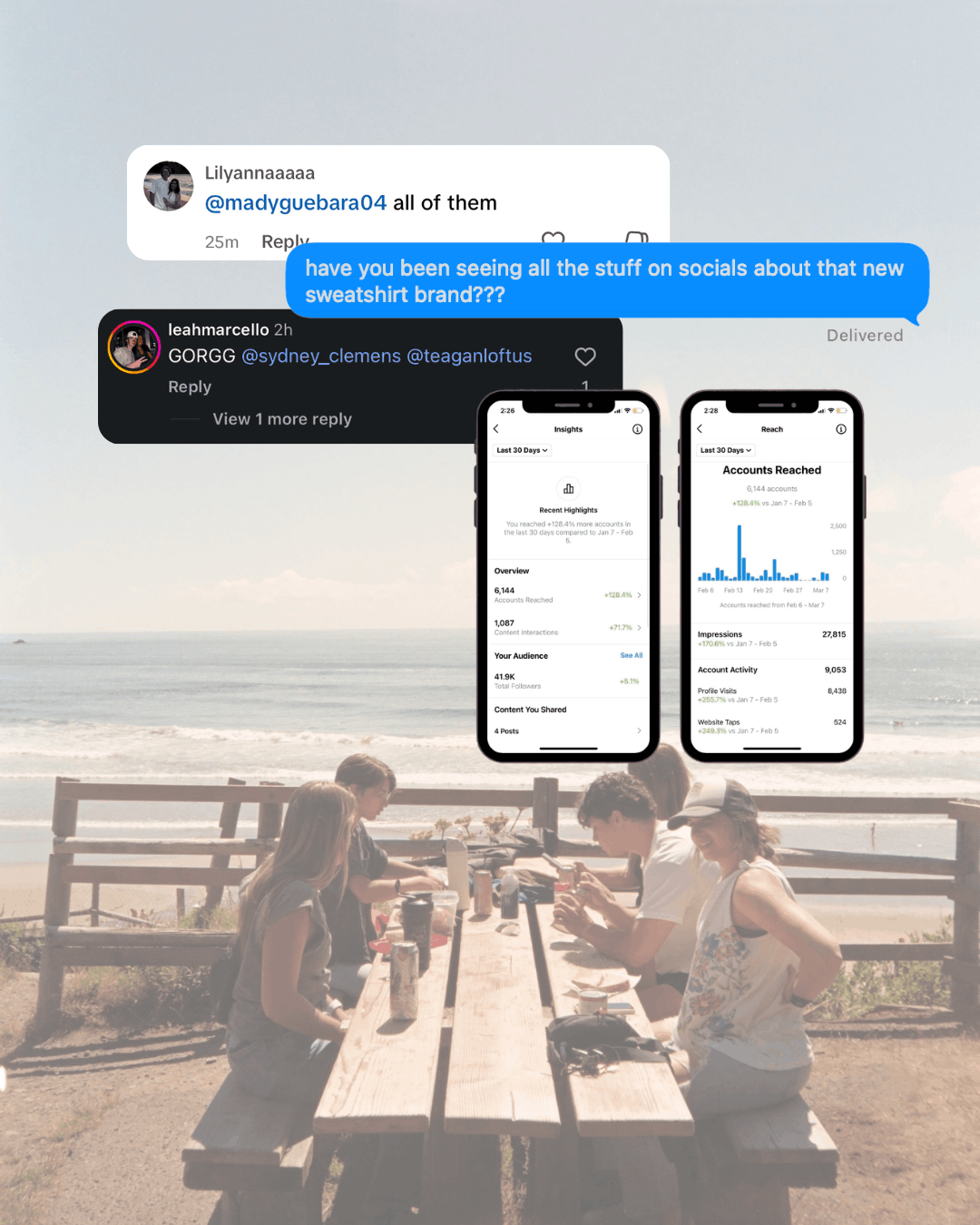
The brands that have built the most durable marketing engines in the last decade didn't do it by buying the biggest audiences. They did it by creating the conditions for community to form and then getting out of the way and letting that community do the work.
That looks like content that invites participation rather than just consumption. It looks like creators who genuinely believe in what they're promoting and whose audiences can feel the difference. It looks like a brand that has a clear point of view that people can organize around and share because it says something they believe too.
When you get that right, your audience stops being a number on a dashboard and starts being an engine. One that runs whether you're actively feeding it or not because the people in it are doing the work for you.
The Brands Winning at This Right Now
The common thread across every brand building real community traction right now is not budget. It's not even content quality, though that matters. It's specificity.
They know exactly who they are for. They have a clear perspective that not everyone agrees with, which means the people who do agree with it feel found. They work with creators who actually live in that world rather than creators who will say anything for the right rate. And they show up consistently enough that the community starts to feel like something real rather than a marketing exercise.
Specificity creates belonging. Belonging creates community. Community builds your brand faster and more durably than any follower count ever will.
What We'd Tell Any Brand Still Leading With Follower Count
It's not that follower count is meaningless. A creator with significant reach, a highly engaged audience, and a perfectly aligned community is a great opportunity. The number isn't the problem. Using it as the primary filter is.
The question follower count answers is: how many people once found this person interesting enough to click follow.
The question you actually need to answer is: how many of the right people actively trust this person right now and would bring their network with them.
Those are not the same question. And they don't have the same answer.
The brands winning at influencer marketing and community building in 2026 are the ones who figured out that the goal isn't to broadcast to the biggest audience. It's to build something worth belonging to and find the creators who already have communities that feel the same way.
That's what we look for. And it's what we help our clients build.
We Build the Kind of Community That Does the Work for You
At Cucamonga Media, community is not a buzzword we put in decks. It's the actual strategic goal behind every influencer program, every social media strategy, and every content decision we make with our clients.
We help brands stop chasing vanity metrics and start building the kind of audience that advocates, shares, and grows on its own. Because the most powerful marketing team you'll ever have is a community that believes in what you're building.

If you're ready to build that, we'd love to talk.
FAQ
What is the difference between an audience and a community? An audience receives content. A community participates in it, shares it, and feels connected to something through it. An audience gives you reach. A community builds your brand for you by advocating, sharing, and bringing others in organically. The business value of a true community compounds over time in a way that reach alone never does.
Why is follower count an unreliable metric for influencer marketing? Follower count reflects how many people clicked follow at some point in the past. It doesn't measure how many are still paying attention, whether they're the right audience for your brand, or whether they take action when that creator posts. Engagement rate, comment quality, and community alignment are much stronger indicators of actual influence.
What is a micro influencer and why do they often outperform larger accounts? A micro influencer typically has between 10,000 and 100,000 followers. They tend to have higher engagement rates, tighter niche audiences, and stronger community trust than larger accounts. For brands trying to reach a specific audience and build genuine credibility, micro influencers frequently outperform much larger accounts because their communities are more connected and the trust transfer is more powerful.
How does community building translate into measurable business results? Community members become brand advocates who create content, share recommendations, and bring their networks in organically. This reduces customer acquisition costs over time, increases word of mouth referrals, improves retention, and creates a distribution channel you don't have to pay for every time you want to reach it. The compounding effect of a strong community shows up in lower paid media dependence and higher lifetime customer value.
How does Cucamonga Media approach building community through influencer strategy? We start by defining exactly who the brand is for and what they need to feel in order to belong. From there we identify creators by community fit first and audience size second, evaluate the quality of the trust and engagement in their existing communities, and build programs designed to bring the right people into genuine relationship with the brand rather than just expose them to it.
