
How to Brief a Designer: What Great Creative Actually Starts With
Most design feedback sounds like this.
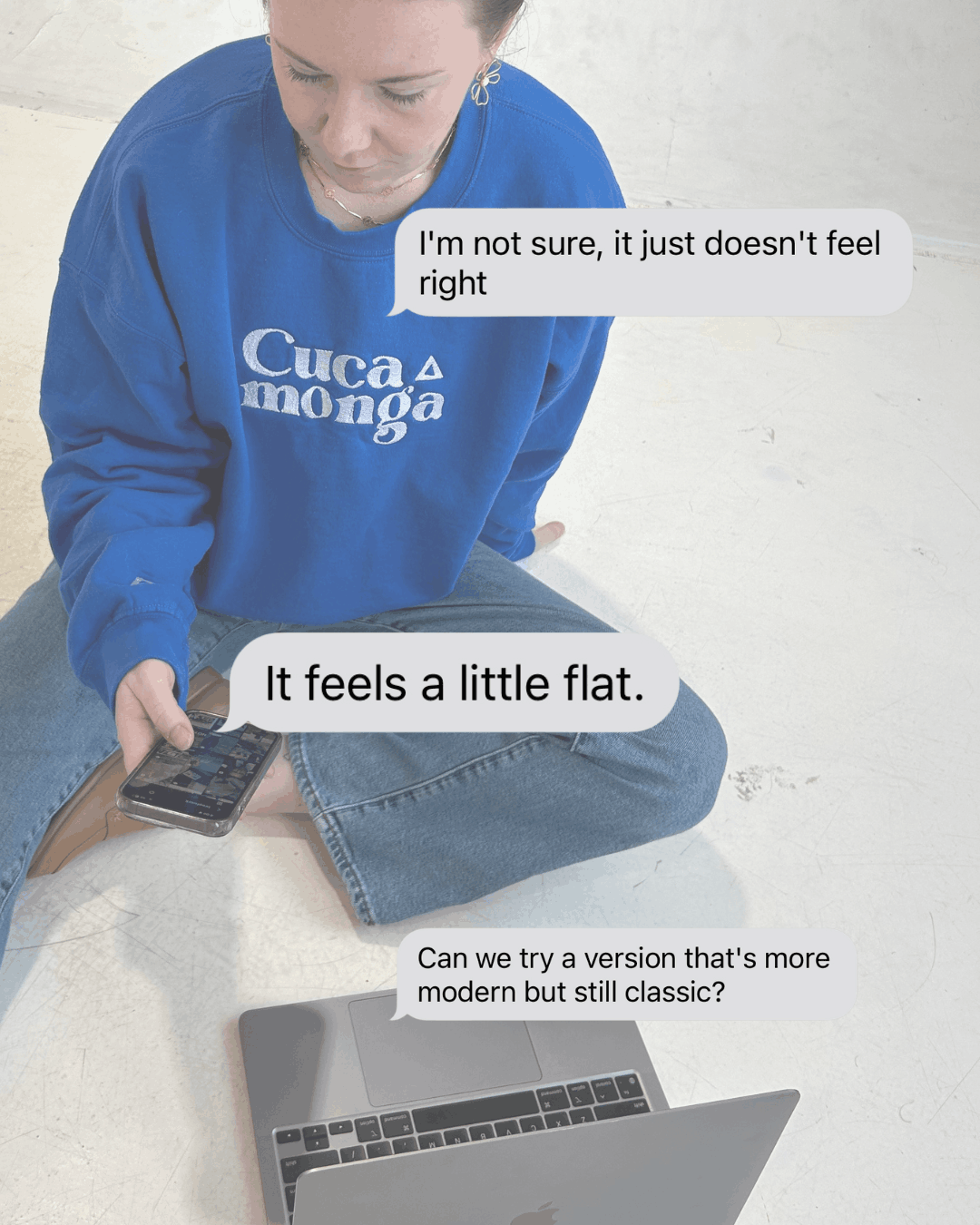
"Can you make it pop more?" "It feels a little flat." "I'm not sure, it just doesn't feel right." "Can we try a version that's more modern but still classic?" "The CEO doesn't love it."
None of that is a brief. None of that is feedback. And none of it will get you closer to great creative because it is all reacting to execution when the problem almost always lives upstream in the strategy.
Great design does not start with a talented designer, though that matters. It starts with a brief clear enough that a talented designer actually has something to work with. And most brands, even sophisticated ones with experienced marketing teams, are not writing briefs that give designers what they need.
Here is what a brief that actually produces great creative looks like and why almost everything brands currently send falls short.
Why Bad Briefs Are So Common
Nobody sets out to write a bad brief. The problem is that writing a good brief requires doing strategic work that feels separate from the design project itself. It requires answering questions about audience, goal, emotional outcome, and context before anyone has seen a single concept. And in most organizations, that work gets skipped because there is a deadline and it feels faster to just jump to the reference images.
It is not faster. Unclear briefs produce rounds of revisions that each take longer than the original work would have if the brief had been right. The back and forth is not a design problem. It is a brief problem that gets mistaken for a design problem every single time.
The other reason bad briefs are common is that the person writing the brief often does not know what they want until they see it. Which means the brief becomes a starting gun rather than a destination. The designer runs, produces something, the stakeholder reacts, and the real brief gets written through a process of elimination over three or four rounds of revision.
This is one of the most expensive and demoralizing ways to produce creative work. It burns designer time, delays projects, and produces work that nobody is fully happy with because it was shaped by reactions rather than intention.
What a Designer Actually Needs From You
A designer is solving a communication problem. They are trying to create something that makes a specific person feel or understand something specific in a specific context. Everything in a good brief serves that problem.
The goal in one sentence. What is this piece of creative supposed to accomplish? Not what it should look like. What should happen as a result of someone seeing it? What action should they take, what should they believe, what should they feel?
If you cannot answer this in a single sentence you are not ready to brief a designer. You are ready to have a strategy conversation first.
The audience with enough specificity to be useful. Not your general target demographic. The specific person who is going to encounter this piece of creative. What do they already know about your brand? Where are they in their relationship with you? What matters to them and what would make them pay attention or scroll past?
A designer who understands the audience can make decisions about tone, hierarchy, and visual language that serve that person. A designer working from "women 25 to 45" is guessing.
The context in which this will be seen. This one gets skipped constantly and it changes everything. A billboard seen at 60 miles per hour requires completely different design thinking than an email header read on a phone.
A social ad that has two seconds to stop a scroll is a different problem than a brochure someone picks up and reads. A landing page where the visitor already knows the brand is a different context than a cold display ad.
Context shapes every decision a designer makes about hierarchy, legibility, visual complexity, and what can be communicated versus what needs to be stripped away. Without it they are designing in a vacuum.
The emotional register. How should this make someone feel? This is different from the visual aesthetic, though it influences it. Confident and authoritative is different from warm and approachable. Urgent and exciting is different from calm and considered. Premium and exclusive is different from accessible and friendly.
Give the designer a human description of the feeling rather than a list of adjectives. "Like getting advice from someone who has already figured out the thing you're trying to figure out" is more useful than "trustworthy and professional."
What must be included and what is flexible. Be explicit about what is non-negotiable. The logo, the legal line, the specific product name, the CTA copy if it is already written. Everything on that list is fixed. Everything not on it is a design decision and you should say so clearly.
Designers who know where the hard constraints are can work creatively within them. Designers who are unsure which elements are sacred and which are suggestions hedge every decision and produce conservative work as a result.
One or two references for direction, not inspiration. References are useful when they communicate something specific about direction that is hard to describe in words. They are not useful as a mood board, as a collection of things you think look nice, or as a substitute for answering the strategic questions above.
The best use of references in a brief is to show a specific visual approach you want to explore or a specific thing you want to avoid. "Something with this kind of energy" paired with a single reference communicates more precisely than ten images that each point in a slightly different direction.
The Sections That Belong in a Strategy Conversation, Not a Brief
Some of what gets put into briefs should actually happen before the brief is written. Specifically the brand positioning, the messaging hierarchy, and the campaign concept.
A design brief should hand a designer a creative problem with enough context to solve it. It should not be the place where the brand figures out what it is trying to say. If the brief includes phrases like "we want to communicate that we are innovative but also approachable and also reliable and also premium," the messaging work has not been done yet. That is four different briefs and a designer cannot execute all of them at once.
Get the message clear before the brief is written. One primary message. One thing you want the audience to take away. Everything else is supporting context that helps the designer make that one thing land.
What Feedback That Actually Helps Looks Like
Even with a great brief, you will have feedback on concepts. How you give that feedback determines whether the next round gets better or just different.
Useful feedback connects to the brief. It says why something is or is not working in terms of the goal and the audience, not personal preference. "This color palette feels too subdued for the urgency we need to communicate for this campaign" is useful. "I just feel like it needs more energy" is not.
Useful feedback is specific about the problem, not the solution. Your job is to tell the designer what is not landing and why. Their job is to figure out how to solve it. When you tell a designer "make it bigger and bolder," you are solving a problem you have not fully diagnosed. When you tell them "the hierarchy is not communicating that this is time-sensitive," you are giving them the information they need to solve it in a way that serves the whole piece rather than just the element you reacted to.
Useful feedback comes from one aligned voice. The single most common reason creative projects go sideways is consolidated stakeholder feedback arriving as individual reactions from multiple people who have not talked to each other. A designer cannot reconcile contradictory feedback. They should not have to. Someone in the organization needs to own the creative direction, gather input from stakeholders, resolve the contradictions before they reach the designer, and deliver one clear voice.
If you do not have a clear creative decision maker on your team, that is the first thing to fix. Not the brief template.
The Brief Is a Creative Act
Here is the reframe that changes how most marketing teams think about briefing.

A brief is not an administrative task that happens before the creative work starts. It is the first creative act of the project. The thinking that goes into a great brief, the clarity about audience and goal and emotional register and context, is the same thinking that makes great creative possible. You are not filling out a form. You are making strategic and creative decisions that will shape every decision the designer makes downstream.
The brands that consistently produce creative that works are the ones where the people closest to the strategy take briefing seriously as a skill. Where the brief is considered as carefully as the creative output it is meant to generate. Where the conversation about what you are trying to accomplish and for whom happens before anyone opens a design file.
That is where great creative actually starts. Not in the software. In the brief.
We Write Briefs That Get Great Work
At Cucamonga Media, briefing is part of the strategic work we do with every client before a single design concept is developed. We help brands get clear on the goal, the audience, the message, and the context so that the creative team has what they need to produce something worth producing.
If your creative is going through too many rounds, not landing the way you hoped, or consistently feeling like it almost works but not quite, the brief is almost always where the answer lives.
FAQ
Why do most design projects go through so many rounds of revision? Almost always because the brief was unclear about the goal, the audience, or the emotional outcome the creative needed to achieve. Revisions driven by reactions to executional details rather than strategic clarity are a sign that the brief did the wrong job. A brief that answers the right questions up front dramatically reduces the number of revision rounds because the designer and the stakeholder are working toward the same destination.
What is the most important element of a design brief? The goal in one sentence. What should happen as a result of someone seeing this piece of creative? If that question is not answered clearly and specifically, everything else in the brief is building on an unclear foundation. Audience, context, and emotional register all matter, but they serve the goal. Without a clear goal the designer is solving the wrong problem no matter how well they execute.
How many references should you include in a design brief? One or two, used to communicate something specific about direction that is hard to describe in words. More than that and references start to contradict each other and confuse rather than clarify. References should never substitute for answering the strategic questions in the brief.
How do you give design feedback that actually moves the work forward? Connect feedback to the brief rather than personal preference. Name the problem rather than prescribing the solution. And deliver feedback from one aligned voice rather than as individual reactions from multiple stakeholders. "This is not communicating urgency and it needs to" is useful feedback. "Can you make it pop more" is not.
When should the messaging be figured out before the design brief is written? Always. A design brief should hand a designer a clear creative problem to solve. It should not be the place where the brand figures out what it is trying to say. If the messaging is still unresolved when the brief is written, the brief will reflect that confusion and the creative will too. Get to one clear primary message first, then brief the designer on how to make that message land.
